Oct 4, 2026Sourcing & Importing
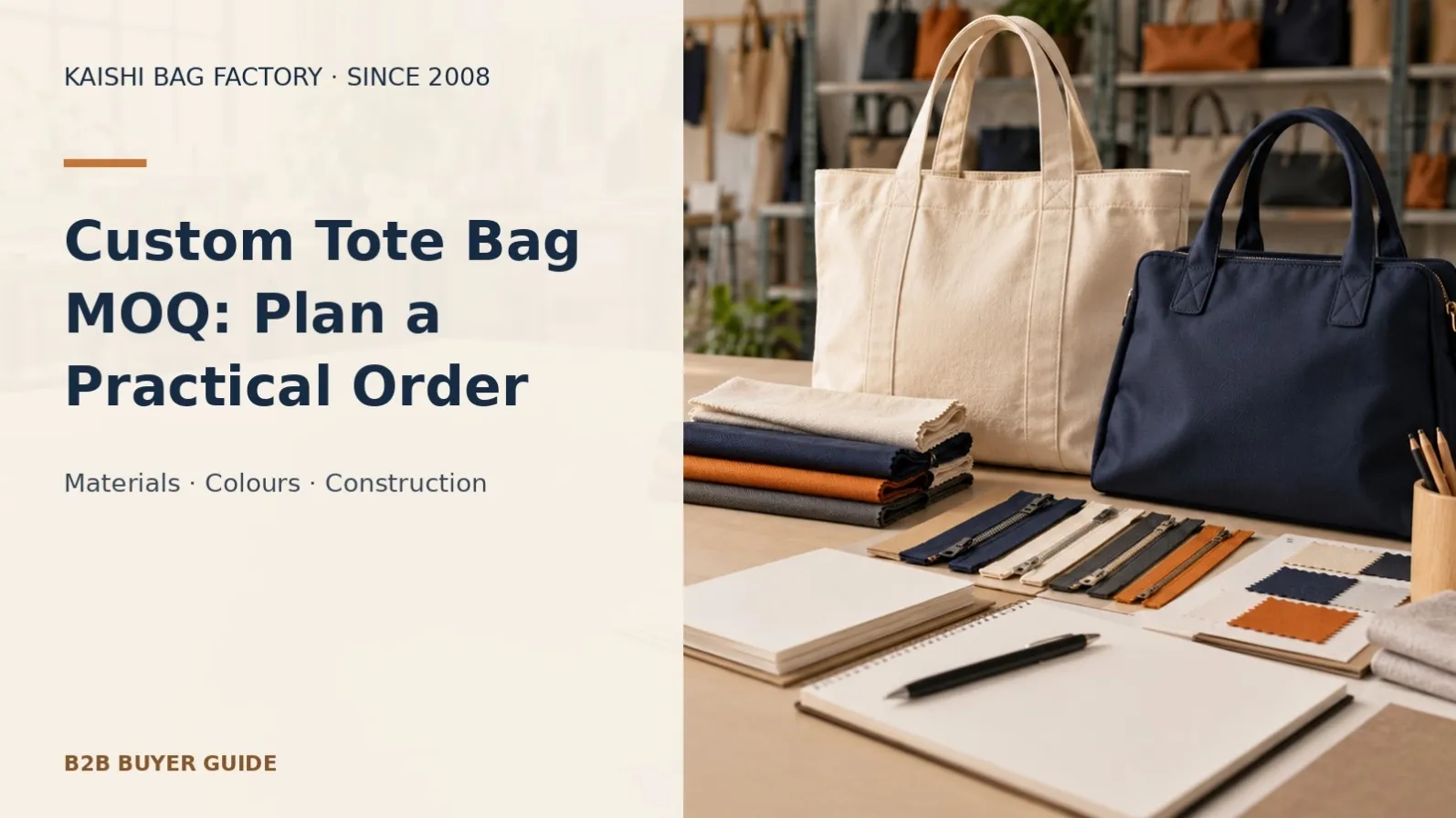
Custom Tote Bag MOQ: What Drives It and 5 Ways to Lower It
What actually drives custom tote bag MOQ, and five practical ways to lower it without wrecking your unit price. Factory-side numbers, no fluff.
BAG SOURCING GUIDES
Practical guides for brands and importers on sourcing, sampling, materials, quality control and importing custom bags from China.
What actually drives custom tote bag MOQ, and five practical ways to lower it without wrecking your unit price. Factory-side numbers, no fluff.
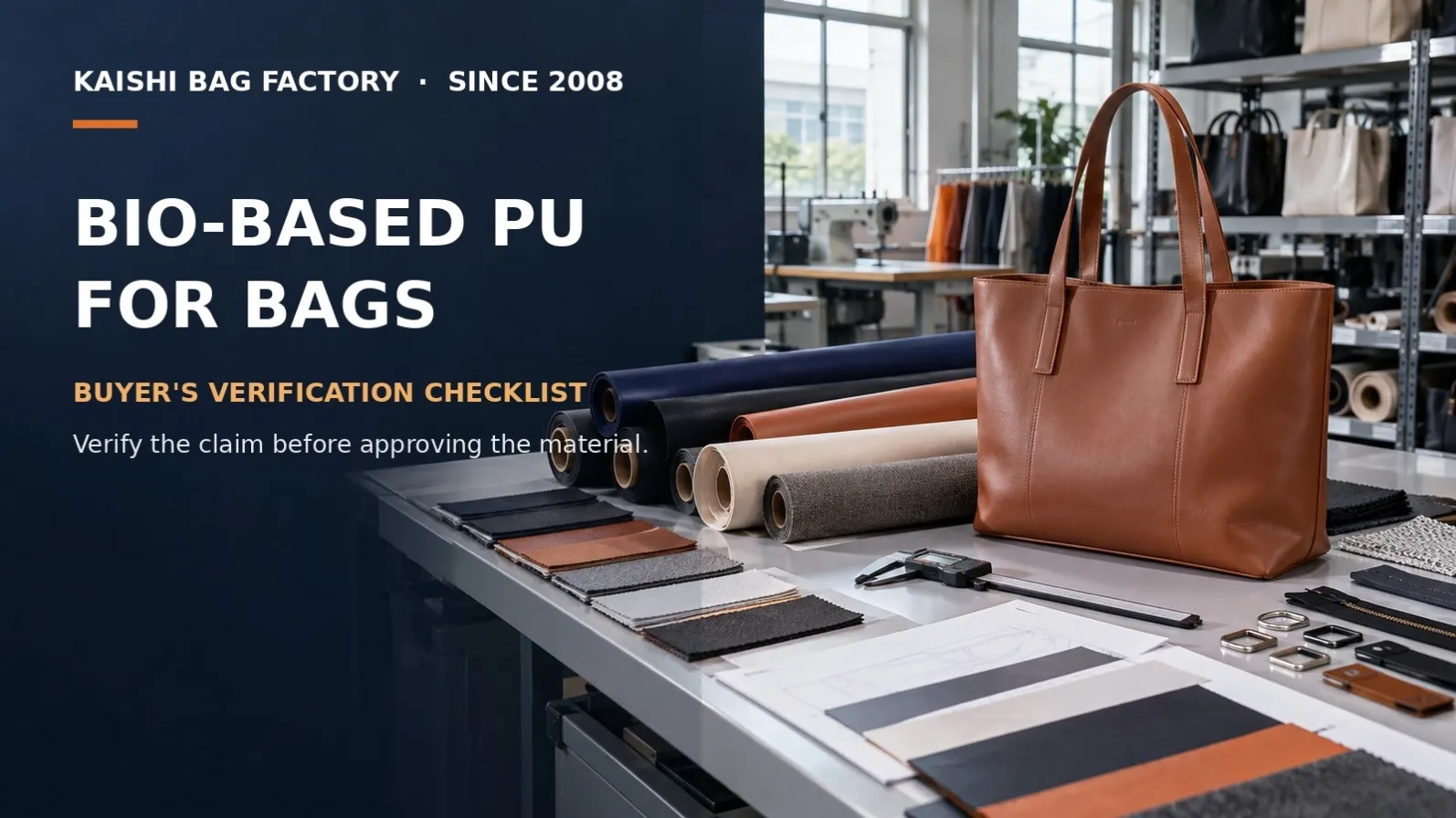
Bio-based PU and next-gen bag materials split into three tiers: production-ready, small batch, and lab stage. Seven questions to ask any supplier first.
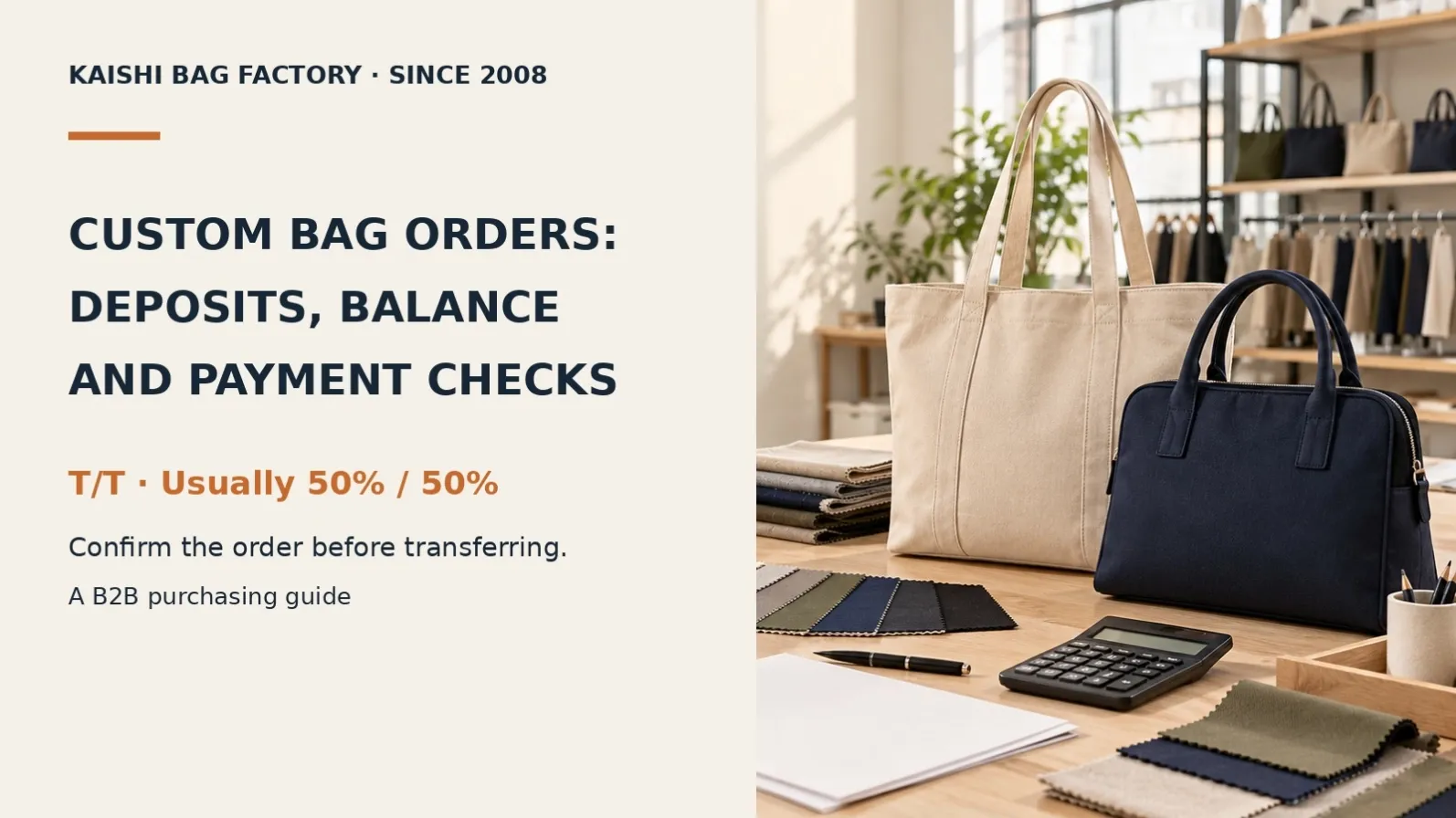
Kaishi uses T/T, usually 50% deposit and 50% before shipment. A buyer checklist for invoices, bank verification, sample approval and inspection.
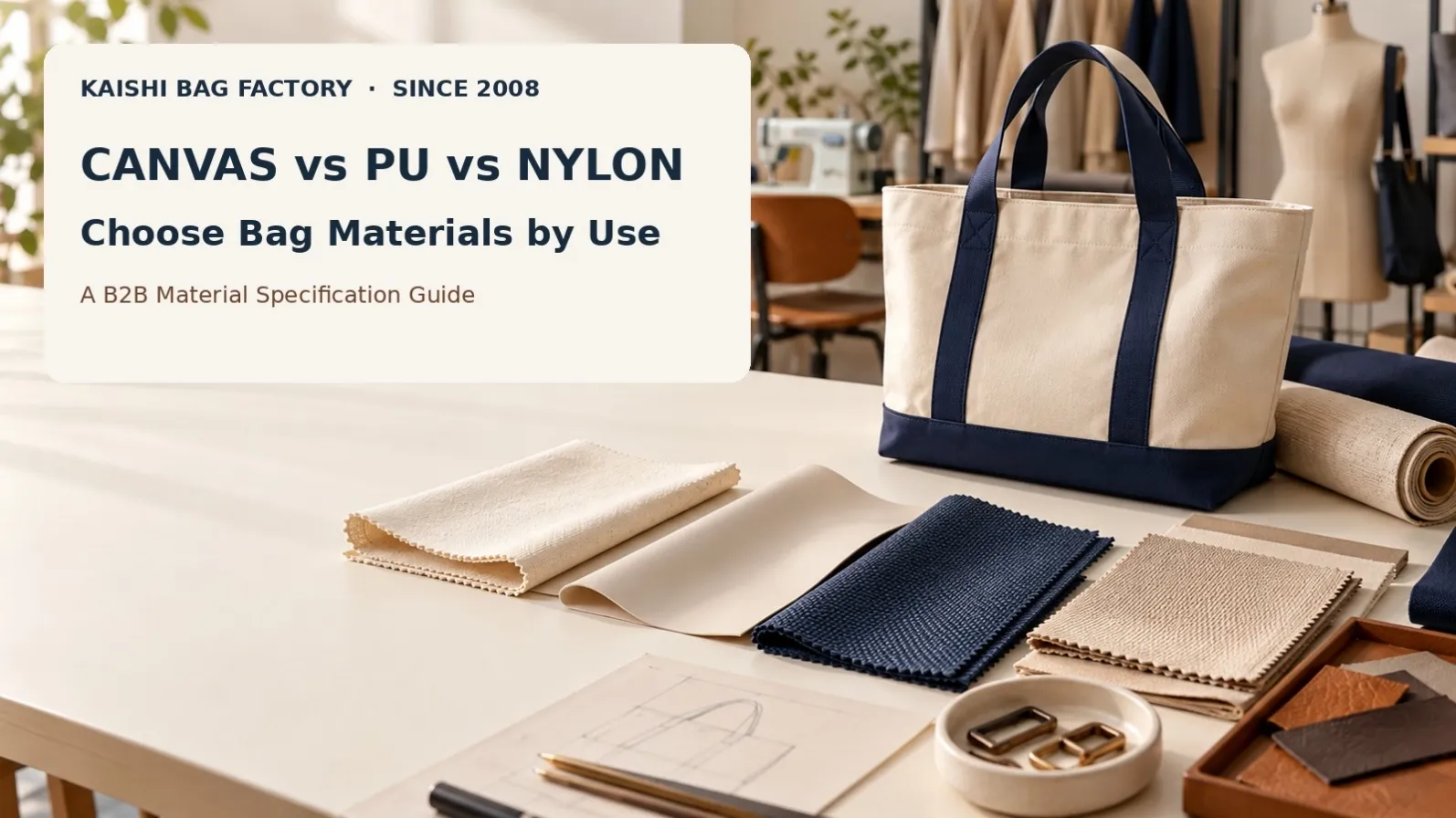
Compare canvas, PU-coated fabric, nylon and polyester by construction, test plan, branding and use case—not fibre rankings. A B2B material approval checklist.
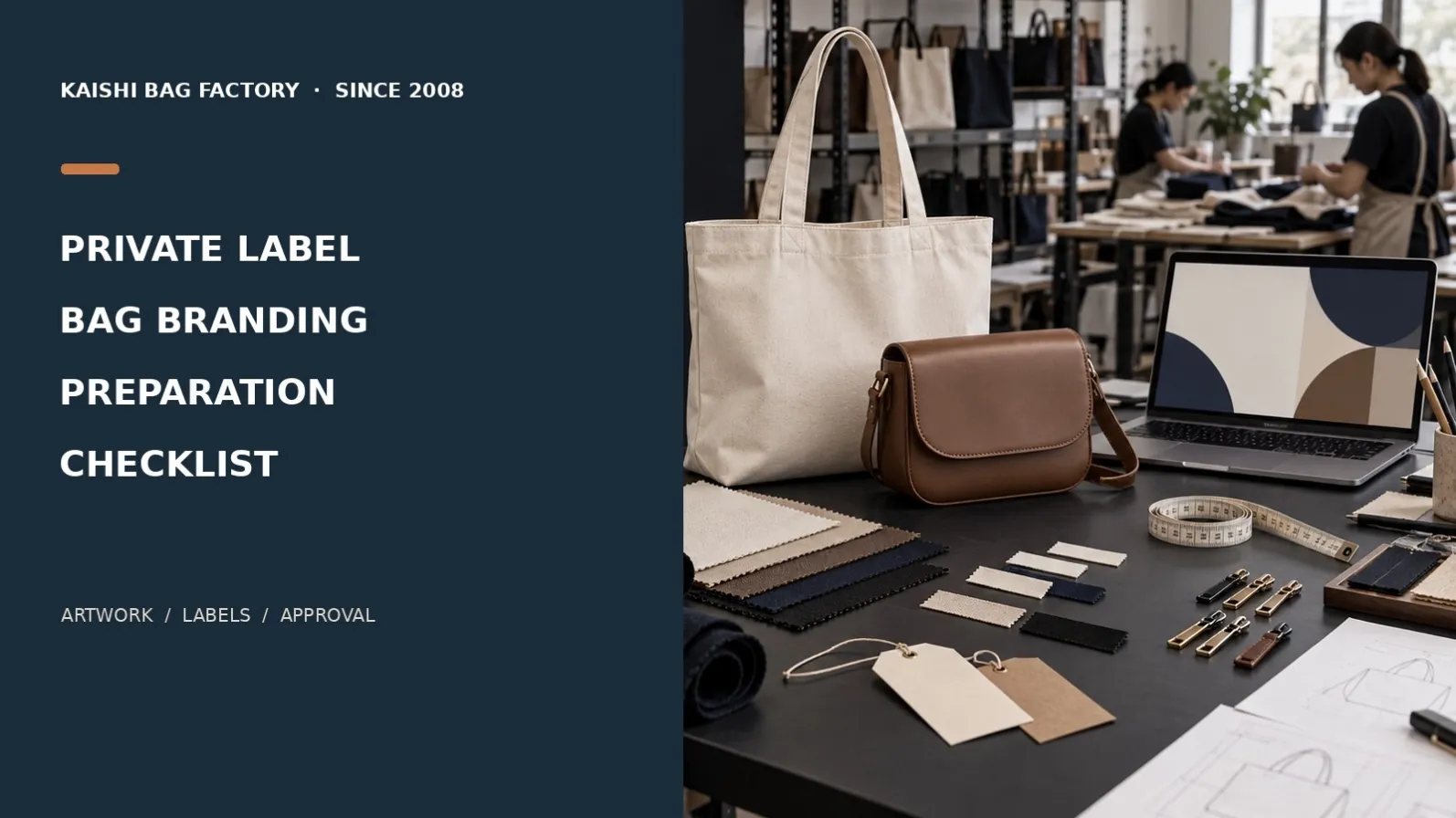
Private label bag buyer checklist: approve artwork, measured logo placement, label wording, material-compatible branding and a production-intent sample before bulk.
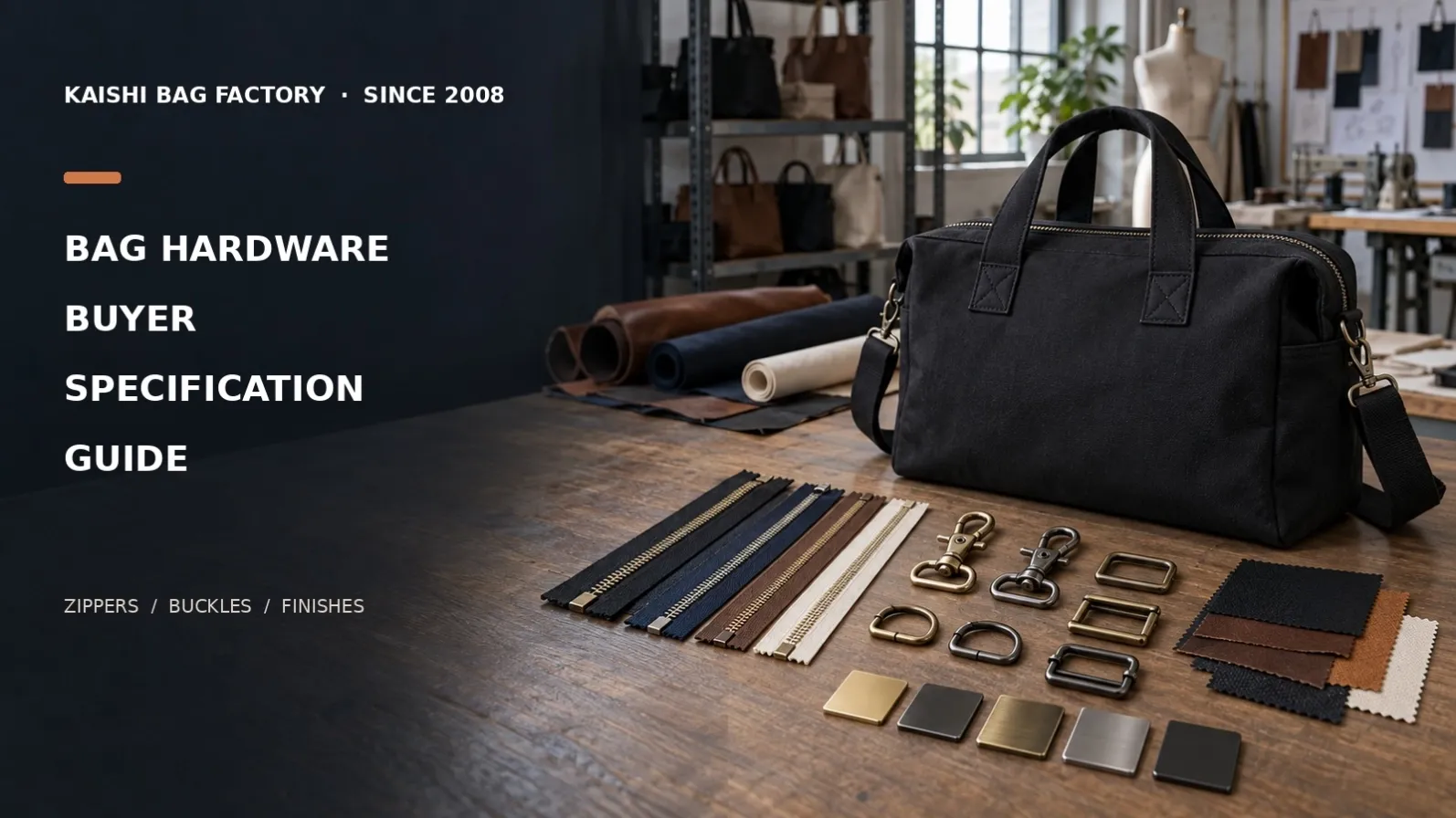
B2B guide to specifying zippers, buckles, hooks and metal finishes for custom bags. Compare function, samples and test methods before bulk production.
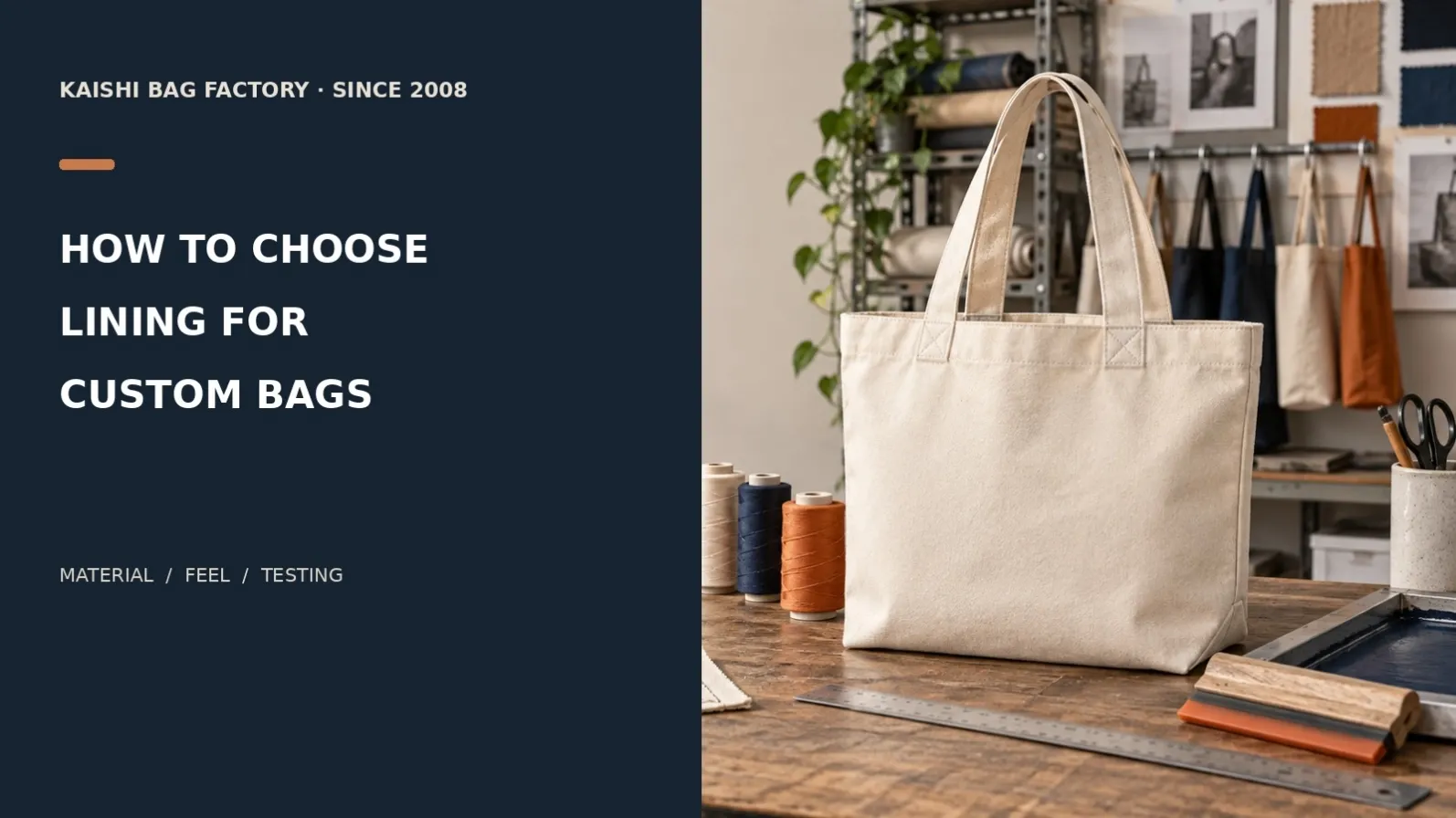
How to specify bag lining by use, fibre, construction, colour and test method. A practical OEM buyer checklist for swatches and sample approval.
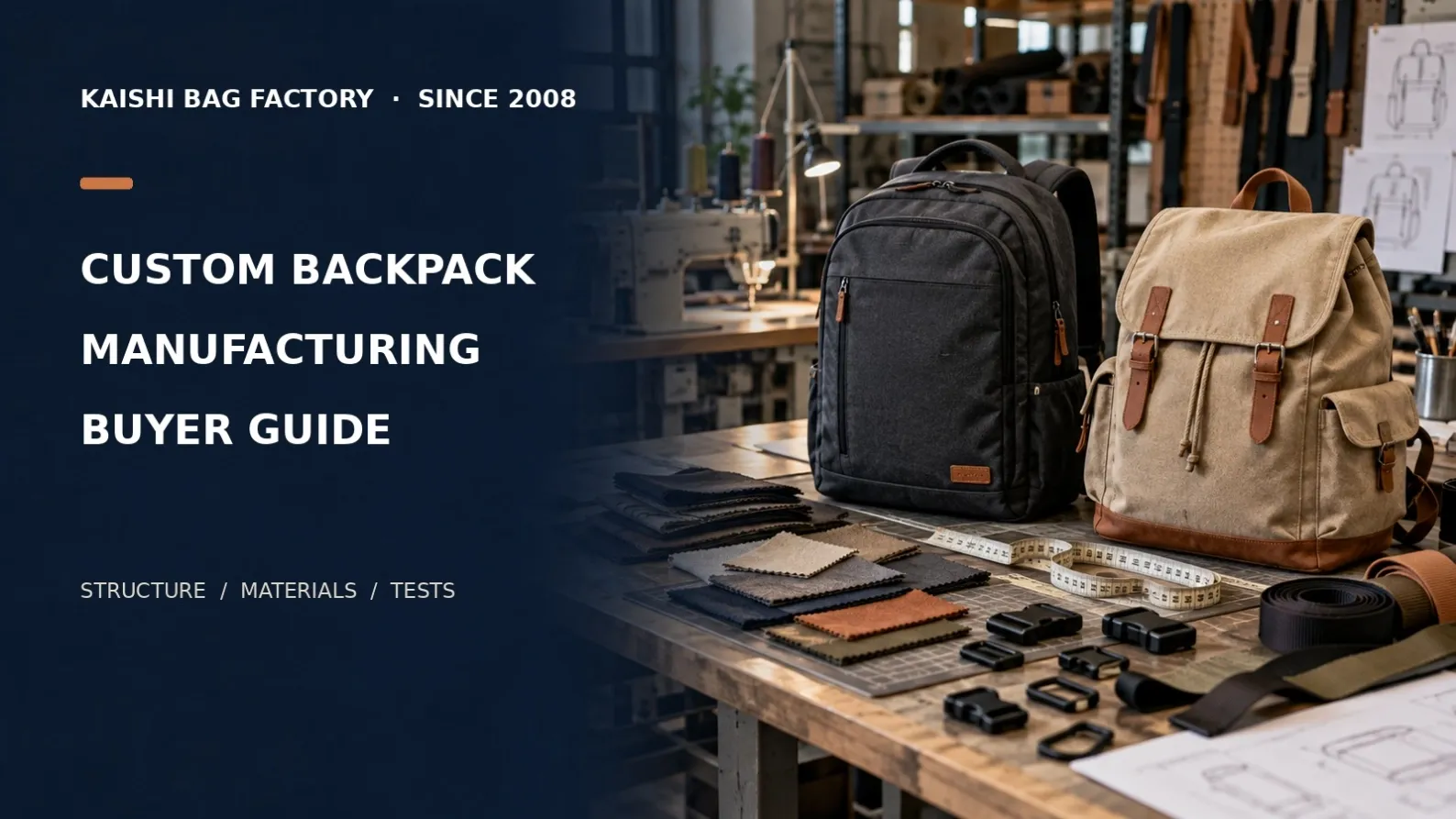
OEM backpack buyer guide: define load paths, materials, pockets and tests; approve a sample before bulk production. Kaishi MOQ is usually 300 pieces per style.
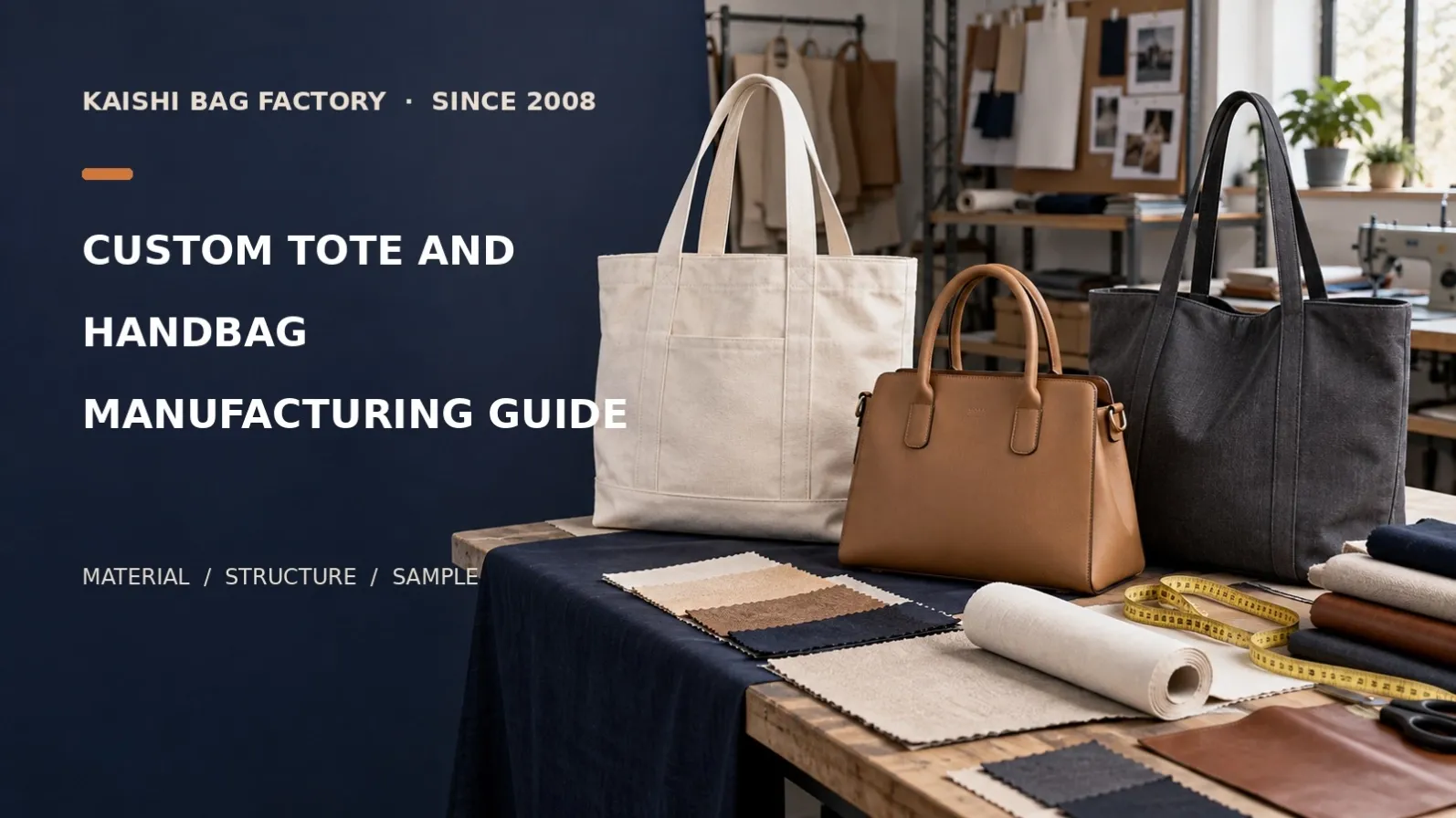
A B2B specification guide to custom tote and handbag materials, structure, handles, hardware, sample checks and MOQ for OEM/ODM buyers.
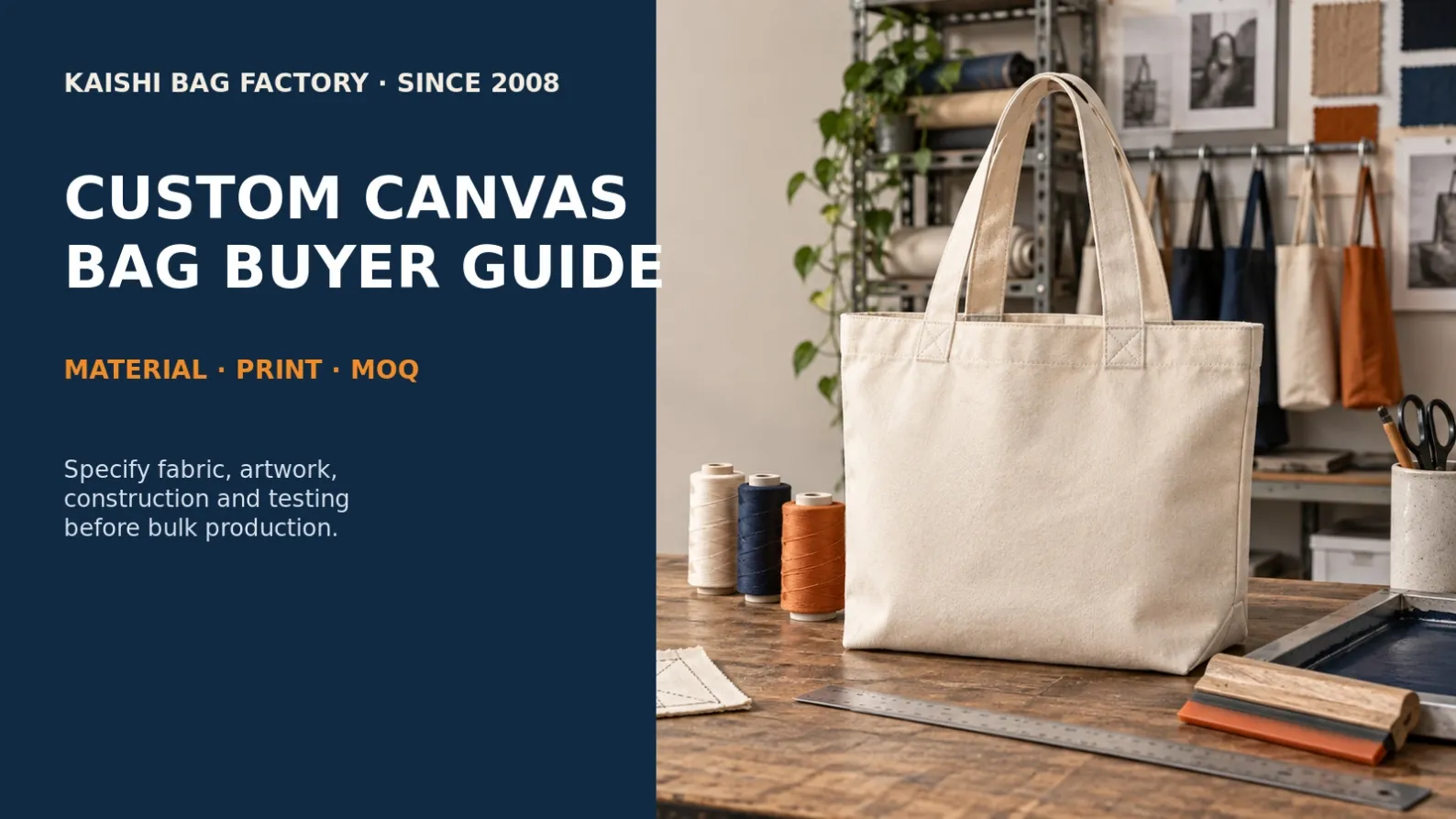
A B2B buyer guide to specifying canvas fabric, printing, handle construction, claim documents, MOQ and sample approval for custom bags.