
Sep 20, 2026Sourcing & Importing
US Tariffs on Chinese Bags in 2026: How to Calculate Your True Landed Cost
What US tariffs really apply to Chinese bags in 2026: MFN base rates, Section 301, the July forced-labor action, and a line-by-line landed cost example.
If you import handbags, backpacks, canvas tote bags or other bags from China, the factory price is only the starting point. Your true cost also depends on the product's HTS classification, the normal US customs duty, any applicable Section 301 tariff, the additional 2026 China duty, freight, insurance, brokerage and other import charges.
This guide explains how to build a practical landed-cost estimate before confirming an order. It is written for US brands, wholesalers and importers sourcing finished bags from China.
Important: Tariff treatment depends on the exact product, material, construction, use and HTS classification. The examples below are for planning only. Ask a licensed US customs broker to confirm the classification, applicable exclusions and final duty treatment before shipment.
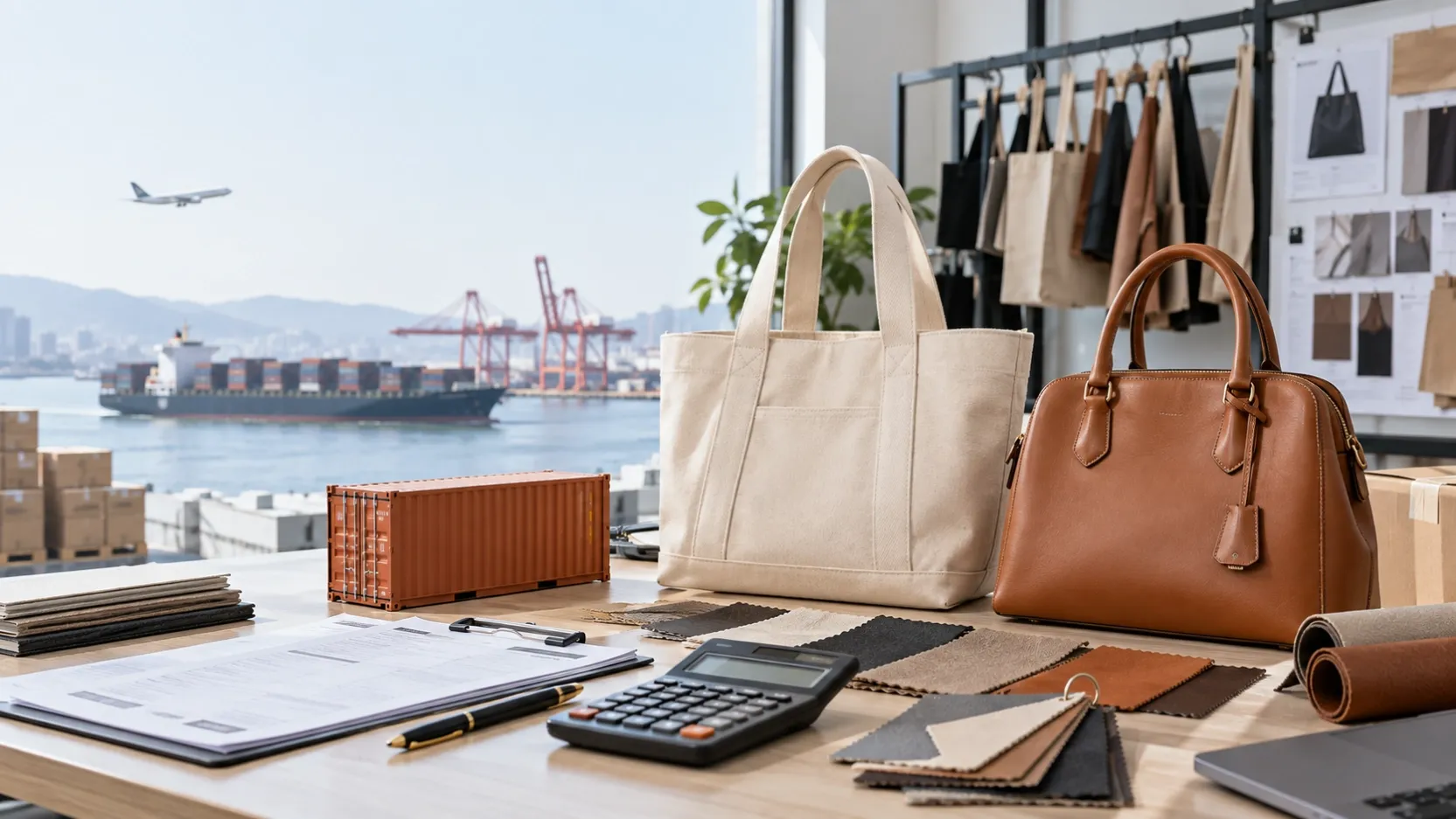
The three tariff layers importers should check
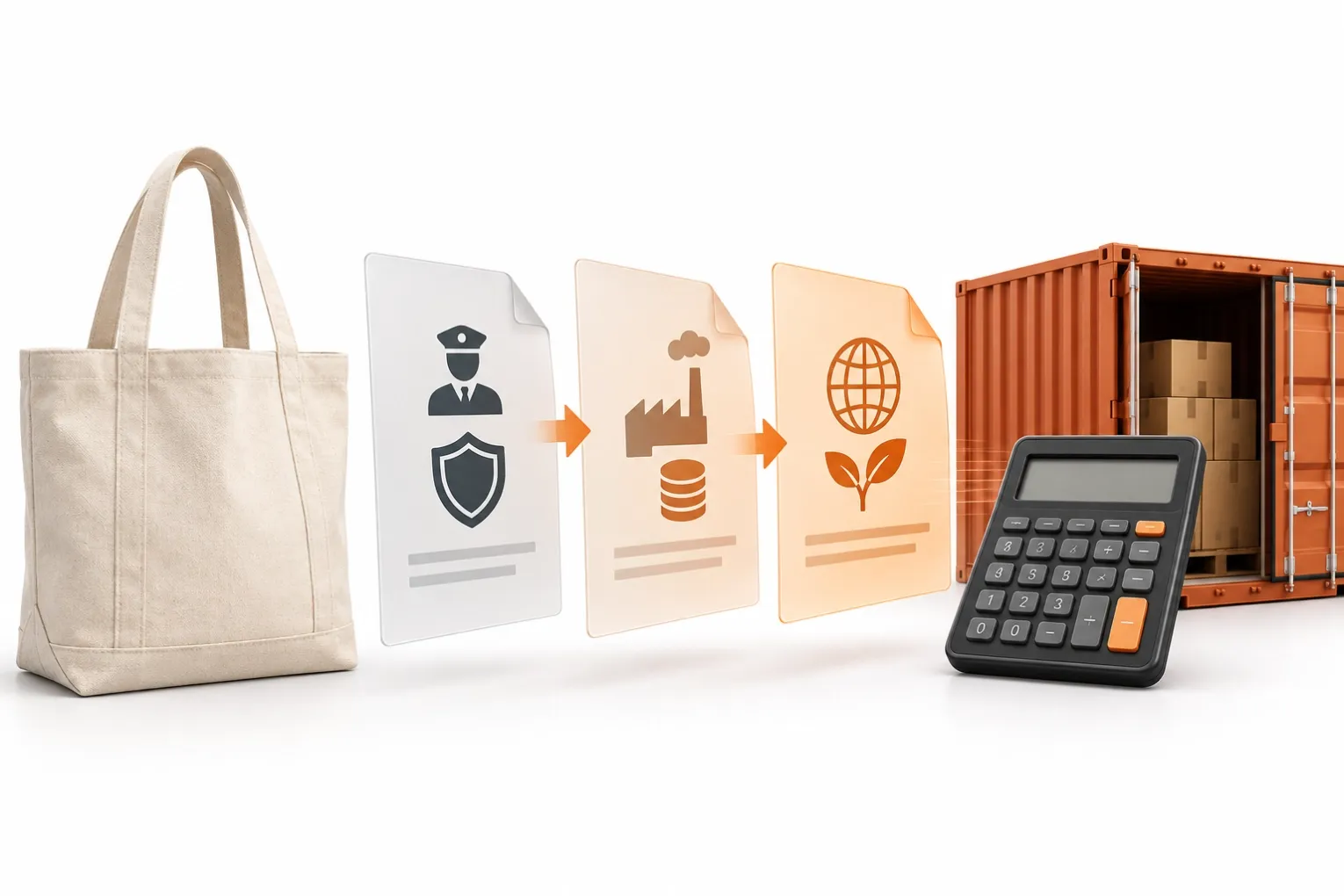
For many bags made in China, the duty calculation may contain three separate layers.
1. Normal MFN duty
The base duty comes from the Harmonized Tariff Schedule of the United States. Bags are generally classified in heading 4202, but the exact subheading depends on details such as:
- the bag's intended use;
- the material of its outer surface;
- whether it is a handbag, travel bag, backpack, shopping bag or another type of container; and
- its construction and value.
Different subheadings can carry very different rates. A leather handbag and a cotton canvas tote should not automatically be assigned the same duty rate.
Use the current USITC Harmonized Tariff Schedule and confirm the final code with your customs broker.
2. Section 301 duty, when applicable
Many China-origin bag classifications have been subject to an additional Section 301 duty, commonly 25%. However, importers should not assume that every bag has the same treatment. The applicable Chapter 99 provision, product scope and any active exclusion must be checked against the exact HTS subheading.
3. The additional 2026 China duty
Effective July 24, 2026, covered products of China are subject to an additional 12.5% duty under HTSUS 9903.05.31, unless a listed exception applies.
For China, this 12.5% duty is an additional charge. It is not reduced to zero simply because a product already has a 25% Section 301 tariff. The net-of-MFN cap arrangements announced for certain other trading partners do not apply to China.
Official references:
Example: landed cost for a cotton canvas tote bag
Assume the following planning figures for one finished tote bag:
Cost item | Calculation | Amount per bag |
|---|---|---|
FOB price | — | $4.50 |
Illustrative MFN duty | $4.50 × 17.6% | $0.79 |
Illustrative Section 301 duty | $4.50 × 25% | $1.13 |
Additional 2026 China duty | $4.50 × 12.5% | $0.56 |
Ocean freight allocation | Estimate | $0.90 |
Customs clearance allocation | Estimate | $0.20 |
Estimated landed cost | Total | $8.08 |
In this example, the combined duty rate is 55.1%, and total duty is approximately $2.48 per bag.
This is an illustration, not a tariff ruling. It assumes that the selected 17.6% base rate is correct for the product and that both additional duties apply. Insurance, harbor or merchandise processing fees, inland delivery, storage, inspection, financing and other charges are not included.
A simple landed-cost formula
For an initial estimate, use:
Landed cost per unit = product value + total customs duties + international freight + insurance + customs/brokerage fees + destination charges + inland delivery
Do not calculate the three duty layers by multiplying one duty-inclusive figure after another unless the relevant rule specifically requires it. In a typical planning model, each ad valorem duty is calculated against the customs value, then the duty amounts are added together.
Another planning example: a leather handbag
If a leather handbag has an illustrative base duty of 5.7%, and both the 25% Section 301 duty and the 12.5% additional China duty apply, the combined rate would be approximately 43.2% before considering any exclusion or special treatment.
The exact classification still matters. Leather type, outer-surface material, size, value and intended use can change the applicable subheading and rate.
Which date determines the applicable duty rate?
For the July 2026 action, CBP applies the additional duty to covered goods entered for consumption, or withdrawn from warehouse for consumption, on or after the effective date and time.
The relevant event is therefore not simply the quotation date, deposit date, factory completion date or export date. A shipment that leaves China before a change may still face the new rate if it is entered into the United States after the effective time and no exception applies.
Importers should build a contingency into their landed-cost calculation when production and transit extend across a possible tariff-change date.
Information your supplier should provide
A factory should support classification and customs review with accurate product information. For bags, useful documents may include:
- a detailed commercial invoice;
- packing list;
- bill of materials;
- outer-surface and lining material descriptions;
- product dimensions, intended use and construction details;
- clear product photographs;
- country-of-origin information; and
- shipping documents required by the selected Incoterm.
These records help the importer and broker classify the product correctly. They do not replace the importer's responsibility to comply with US customs, forced-labor and supply-chain requirements.
FOB, EXW and DDP: compare the full offer
The quoted Incoterm changes which costs and responsibilities are visible in the supplier's price.
EXW
The buyer takes responsibility from the factory and normally arranges export handling, main freight, import clearance and delivery. A low EXW price can hide significant logistics costs.
FOB
Under an FOB quotation, the supplier normally delivers the goods on board at the named Chinese port. The buyer then controls the main freight, US import clearance, duties and destination delivery.
DDP
A DDP offer can simplify budgeting because the seller quotes delivery to an agreed destination. Importers should still ask what is included, who will act as importer of record, how the goods will be declared and whether the arrangement complies with US customs requirements.
Compare quotations on the same Incoterm and with the same assumptions. A lower factory price does not always produce a lower landed cost.
Is “China+1” automatically cheaper?
No. A country change should be evaluated using the full landed cost rather than one headline tariff.
Compare:
- base duty and additional country-specific duties;
- material and labor cost;
- minimum order quantity;
- sampling and development expense;
- production capacity and quality consistency;
- freight route, transit time and port risk;
- compliance and traceability; and
- the cost of managing another supplier.
For design-sensitive or technically detailed bags, development speed, material sourcing and quality control can outweigh a small difference in one tariff line.
How to reduce landed-cost risk before ordering
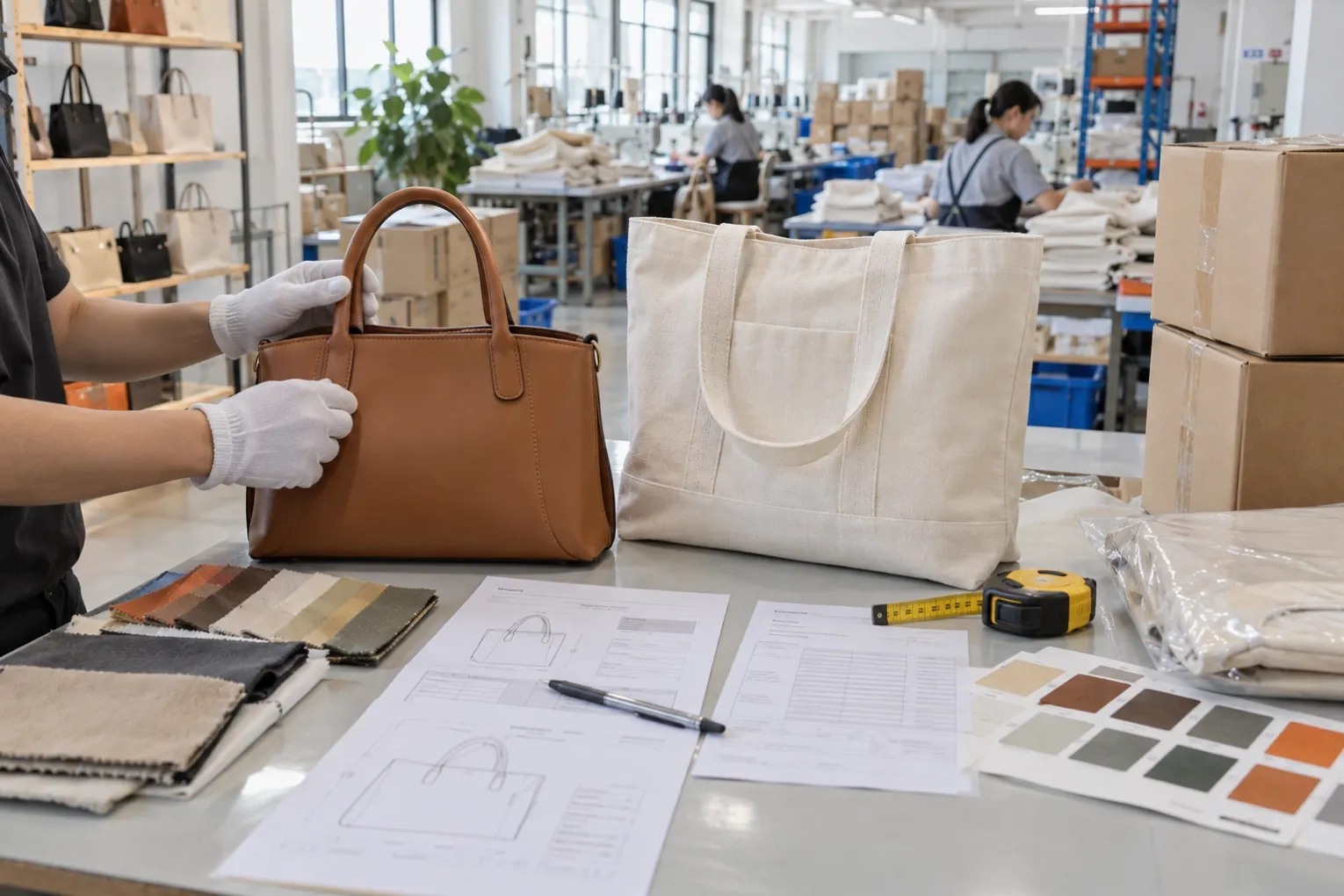
Confirm the product specification first
Small material or construction changes can affect classification. Finalize the outer material, lining, size, use, closure, handles and straps before asking for a landed-cost estimate.
Ask your customs broker for a classification review
Provide the broker with photos, material breakdown and intended use. For recurring or high-value imports, consider whether a binding ruling is appropriate.
Separate product cost from logistics assumptions
Keep the FOB value, duty rates, freight, clearance and inland delivery in separate lines. This makes it easier to update the model when one input changes.
Add a tariff contingency
If the shipment may enter the United States after a policy-change date, model a higher-duty scenario before approving the order.
Keep origin and material records
Maintain purchase records, supplier information and material documentation. Tariff payment does not remove separate customs or forced-labor compliance obligations.
Sourcing custom bags from Kaishi Bag Factory
Kaishi Bag Factory in Baigou, China has provided OEM and ODM bag manufacturing services since 2008. We produce fashion handbags, leather bags, canvas tote bags and other custom bag styles for brands, wholesalers and importers.
Our standard minimum order quantity is normally 300 pieces per style. The final MOQ depends on the material, color, hardware and construction. Lead time also varies by design complexity, material availability, sample approval and order quantity, so it should be confirmed in the proforma invoice.
Our standard payment terms are 50% deposit by T/T and 50% balance before shipment.
To request a quotation, send us:
- product photos, drawings or a reference sample;
- dimensions and target materials;
- required quantity and colors;
- logo and packaging requirements;
- destination country or port; and
- preferred Incoterm.
Contact Kaishi Bag Factory for a product quotation and export document checklist. Your US customs broker should make the final determination on HTS classification and duty treatment.