
Sep 14, 2026Sourcing & Importing
How to Customize Bags with Kaishi Bag Factory
A step-by-step guide to customizing bags with Kaishi Bag Factory — from NDA and sample development to bulk production, quality inspection and shipment.
How to Customize Bags with Kaishi Bag Factory
Whether you have a complete design, a physical sample, reference images, or simply an initial idea, Kaishi Bag Factory can help turn your concept into a production-ready bag.
A successful custom bag project involves more than choosing a style and adding a logo. Materials, dimensions, construction, hardware, packaging, order quantity, and quality requirements must all be clearly defined before bulk production begins.
This guide explains our standard OEM and ODM development process, from the initial project review to final shipment.
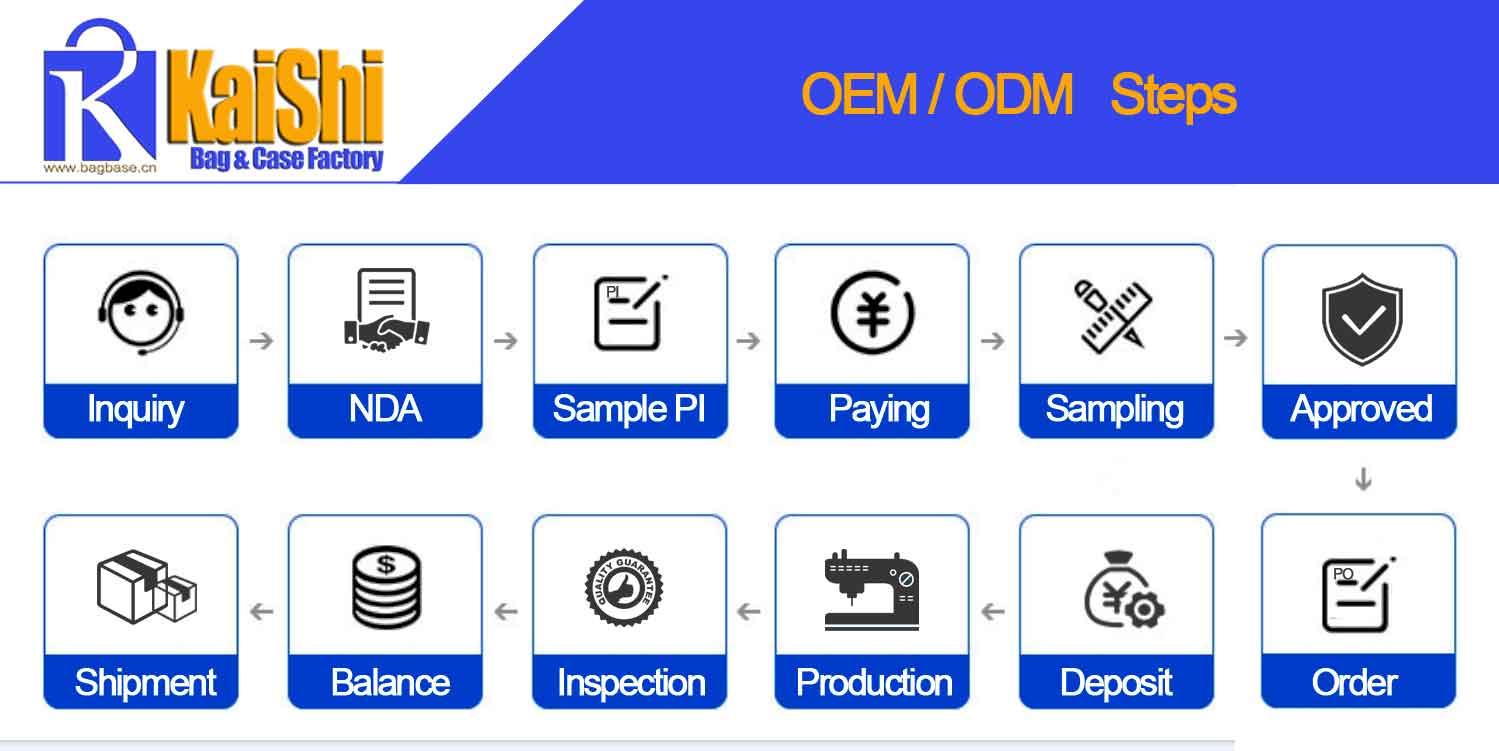
10 Steps from Bag Idea to Bulk Production
Stage 1 — Project Review and Specification Development
1. Share Your Design or Product Idea
A custom bag project can begin with:
- A technical drawing or tech pack
- A physical reference sample
- Product photographs
- Hand-drawn sketches
- Material or color references
- A description of the intended use
- An initial product idea
Please also provide your estimated order quantity and target market when possible. These details help us evaluate the appropriate materials, construction methods, customization options, and production feasibility.
The more complete the initial information is, the more accurately we can assess the project.
2. Sign an NDA When Required
If your project involves an original design, confidential technical information, or commercially sensitive materials, we can sign a non-disclosure agreement (NDA) before you share the complete project details.
The NDA helps protect your drawings, specifications, branding information, and other confidential project materials.
An NDA is available when appropriate, but it is not required for every general inquiry or standard customization project.
3. Confirm the Product Specifications
Before sample production begins, we discuss the project details and prepare a written specification list for your confirmation.
Depending on the bag, this document may include:
- Front, back, side, bottom, and interior views
- Finished dimensions
- Intended use and required capacity
- Outer material and lining
- Material thickness, weight, or surface finish
- Colors and color references
- Internal reinforcement and bag structure
- Zippers, buckles, magnets, and other hardware
- Handles, shoulder straps, and attachment methods
- Pockets and internal compartments
- Logo artwork, application method, size, and position
- Labels, hangtags, polybags, cartons, and other packaging requirements
Combining images with written descriptions gives the buyer, sales team, and sample makers one clear reference point.
If any detail changes during development, it should be added to the specification list rather than left in separate emails or chat messages.
4. Receive a Preliminary Quotation
Once we understand the main specifications, materials, construction, customization requirements, and estimated quantity, we can provide an initial quotation or price range.
At this stage, the quotation is based on the information currently available. It may need to be adjusted if the materials, hardware, construction, packaging, or other product details change during sample development.
The practical MOQ also depends on the specific project. Material availability, custom colors, hardware, logo application, construction, and supplier requirements can all affect the minimum production quantity.
We therefore evaluate MOQ individually rather than applying the same promise to every custom bag.
Stage 2 — Sampling and Final Approval
5. Confirm the Sample Charge
Before sampling, we provide the sample charge and estimated delivery cost.
The sample charge depends on factors such as:
- Product complexity
- Materials and hardware
- Pattern development
- Logo application
- Special molds or components
- Required workmanship
- Packaging requirements
The delivery cost depends on the destination, parcel size, weight, and selected shipping method.
Sample development begins after the specifications are confirmed and the sample payment has been received.
6. Produce the Sample
Our sample makers produce the bag according to the confirmed specification list.
During development, we may contact you if a material, component, or construction detail requires clarification. When necessary, we can also recommend practical adjustments based on manufacturing feasibility.
The purpose of sampling is not only to create a bag that looks correct. It also allows both parties to evaluate the materials, dimensions, structure, functionality, workmanship, branding, and packaging before bulk production.
Once the sample is complete, we conduct an internal review and arrange delivery to you.
7. Review and Approve the Physical Sample
After receiving the sample, you should check it carefully against the confirmed specifications.
The review should cover:
- Overall dimensions and proportions
- Shape and structure
- Capacity and internal organization
- Outer material and lining
- Color and surface finish
- Stitching and workmanship
- Zippers, buckles, magnets, and other hardware
- Handles and shoulder straps
- Logo method, size, color, and position
- Packaging requirements
- Overall appearance and functionality
If revisions are required, we recommend sending one consolidated list with numbered comments and clearly marked photographs. This helps prevent conflicting instructions and unnecessary sampling rounds.
After the materials, construction, and sample details are finalized, we confirm the accurate bulk-order price.
Once approved, the final physical sample and confirmed specification list become the main reference standards for bulk production.
Stage 3 — Bulk Production and Quality Control
8. Confirm the Proforma Invoice and Begin Production
After sample approval, we issue a proforma invoice (PI) for the bulk order.
The PI records the agreed commercial terms, including:
- Product description
- Final specifications
- Order quantity
- Unit price and total amount
- Payment terms
- Packaging requirements
- Shipping terms
- Estimated production lead time
Bulk production begins after the PI has been confirmed and the agreed deposit has been received.
9. Carry Out Production and Quality Inspections
Quality control is carried out throughout production rather than only after all the bags have been completed.
Our standard process includes four main inspection stages:
- Incoming material inspectionOuter materials, lining, hardware, and other components are checked before production.
- In-process inspectionConstruction and workmanship are monitored during cutting, sewing, and assembly.
- Pre-packing inspectionFinished bags are checked before they are packed.
- Final random inspectionRandom checks are conducted after packing by members of our production and sales teams.
The detailed inspection requirements may vary according to the product, order specifications, and quality standards agreed for the project.
During production, we can also provide photos and videos at key stages so that you can follow the progress of your order. Updates may include materials, production-line progress, finished products, inspections, and packing.
These updates support communication, while the approved sample and specification list remain the primary production standards.
Stage 4 — Final Payment and Shipment
10. Complete the Balance Payment and Arrange Shipment
Once production and the agreed inspections have been completed, we provide the relevant completion information for your review.
The remaining balance is then paid according to the terms stated in the proforma invoice.
After payment has been confirmed, the goods are prepared for dispatch to the agreed destination.
Depending on the order volume, destination, budget, and required delivery time, shipment may be arranged by:
- International express
- Air freight
- Sea freight
- Rail freight
- Truck transportation
- Another agreed shipping method
Available shipping methods, freight costs, export documents, Incoterms, and delivery arrangements are confirmed separately for each order. They are not automatically the same for every customer or destination.
A Clear Process Reduces Production Risk
The steps above provide a simplified overview of our custom bag development and production process.
Each project is different. Materials, colors, hardware, logo applications, construction, packaging, quantity, testing requirements, and destination can all affect the sample process, MOQ, price, lead time, and shipping arrangements.
For this reason, we confirm the details of every project individually rather than offering one set of terms for all custom bags.
A clear specification list, a carefully reviewed physical sample, and written approval before production help reduce misunderstandings, unnecessary revisions, and quality risks.
Start Your Custom Bag Project
If you are planning a custom handbag, tote bag, backpack, travel bag, sports bag, or other functional bag, please send us:
- Your design files or reference images
- The required dimensions
- Preferred materials and colors
- Logo and customization requirements
- Estimated order quantity
- Packaging requirements
- Target delivery country or region
Our team will review the available information, assess production feasibility, and let you know which details still need to be confirmed.
Contact Kaishi Bag Factory to discuss your custom bag project.